
When Rating Becomes an Entry Barrier
Over the past few years, rating has stopped being merely an indicator of financial strength: it is increasingly becoming an eligibility criterion.
In several jurisdictions, regulatory frameworks now explicitly favor reinsurers rated above a certain threshold, often A-. In India, the IRDAI (the Indian regulator) has tightened the tiering of foreign reinsurers based on their rating. In Saudi Arabia, panels are structured around explicit financial-strength requirements. In other markets, insurers and regulators align their internal policies with these international standards even in the absence of a formal requirement.
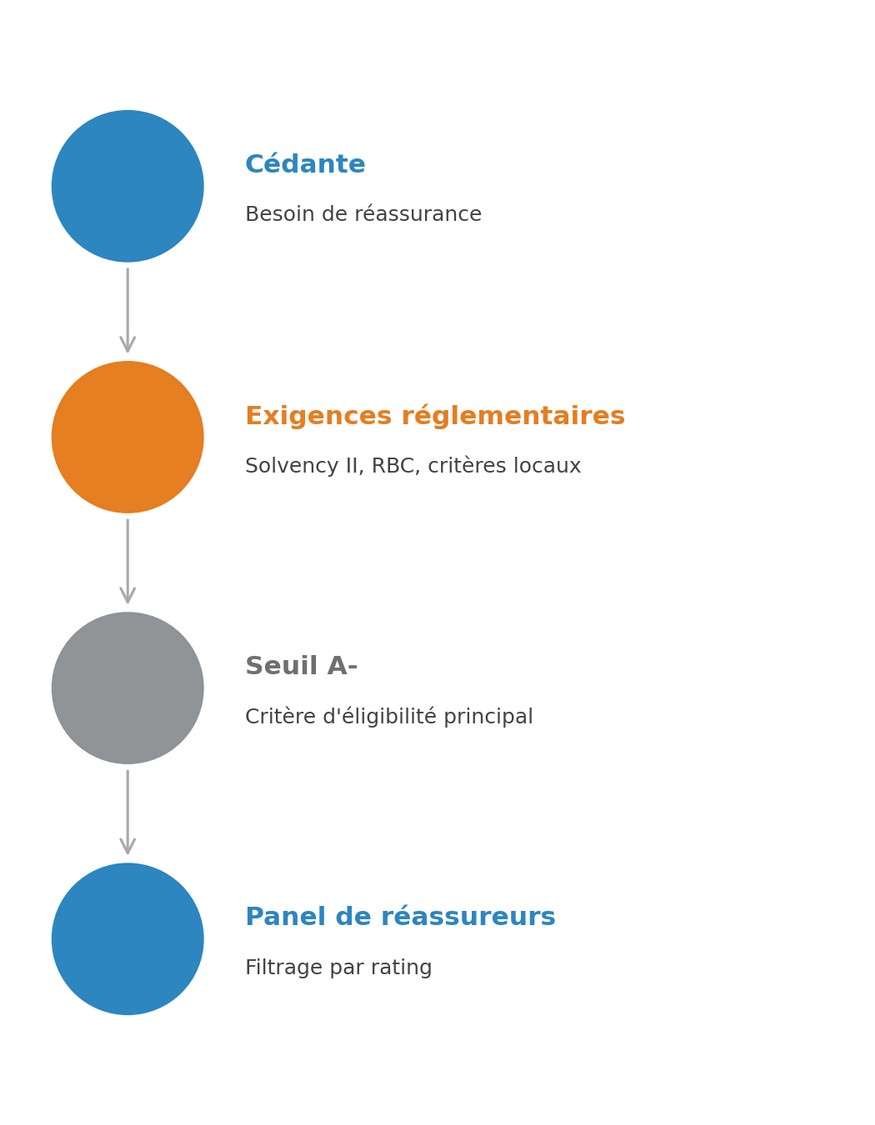
This shift is understandable: rating offers a synthetic benchmark in a technical and complex universe. But a question increasingly forces itself: are we turning a signal of financial strength into an absolute guarantee? Because rating sometimes becomes an automatic filter, applied before any technical analysis even begins.
To gauge the stakes of this debate, it helps to revisit what a rating actually measures.
What a Rating Actually Measures, and Its Structural Limits
Rating agencies such as S&P, AM Best and Moody's rely on sophisticated, structured analytical frameworks. AM Best's BCAR (Best's Capital Adequacy Ratio, an internal indicator measuring capital adequacy against underwritten risk), S&P's capital model, and the stress tests developed by Moody's are all built on an economic-capital logic calibrated against extreme scenarios, aiming to assess the capacity to absorb severe losses.
These approaches model technical losses — attritional or catastrophe-related — while incorporating market, interest-rate, equity and spread risk, as well as credit risk. They account for correlations between these risk categories, assess the quality of available capital, examine governance and risk-management (ERM) frameworks, and look at the degree of geographic and sectoral diversification.
In their internal architecture, these models are robust, coherent and methodologically rigorous. However, they necessarily rest on a set of structuring assumptions that frame their analytical reach and define its limits.
A Periodic Snapshot, Not a Dynamic One
A rating rests on audited accounts, financial projections and periodic exchanges between the agency and the entity being assessed. It captures modeled solvency at a given point in time, enriched by a forward-looking view based on the information available at the time of the analysis.
This approach does not always capture certain critical dynamics in real time: the speed at which an under-priced portfolio can erode, the acceleration of a latent risk still barely visible in the financial statements, the rapid deterioration of asset quality under market stress, accumulation management during a major catastrophe event, or the behavioral dimension of management decisions under pressure. Yet in a crisis, the speed of deterioration can prove just as decisive as the absolute level of displayed capital or solvency.
A Model Built on Historical Distributions
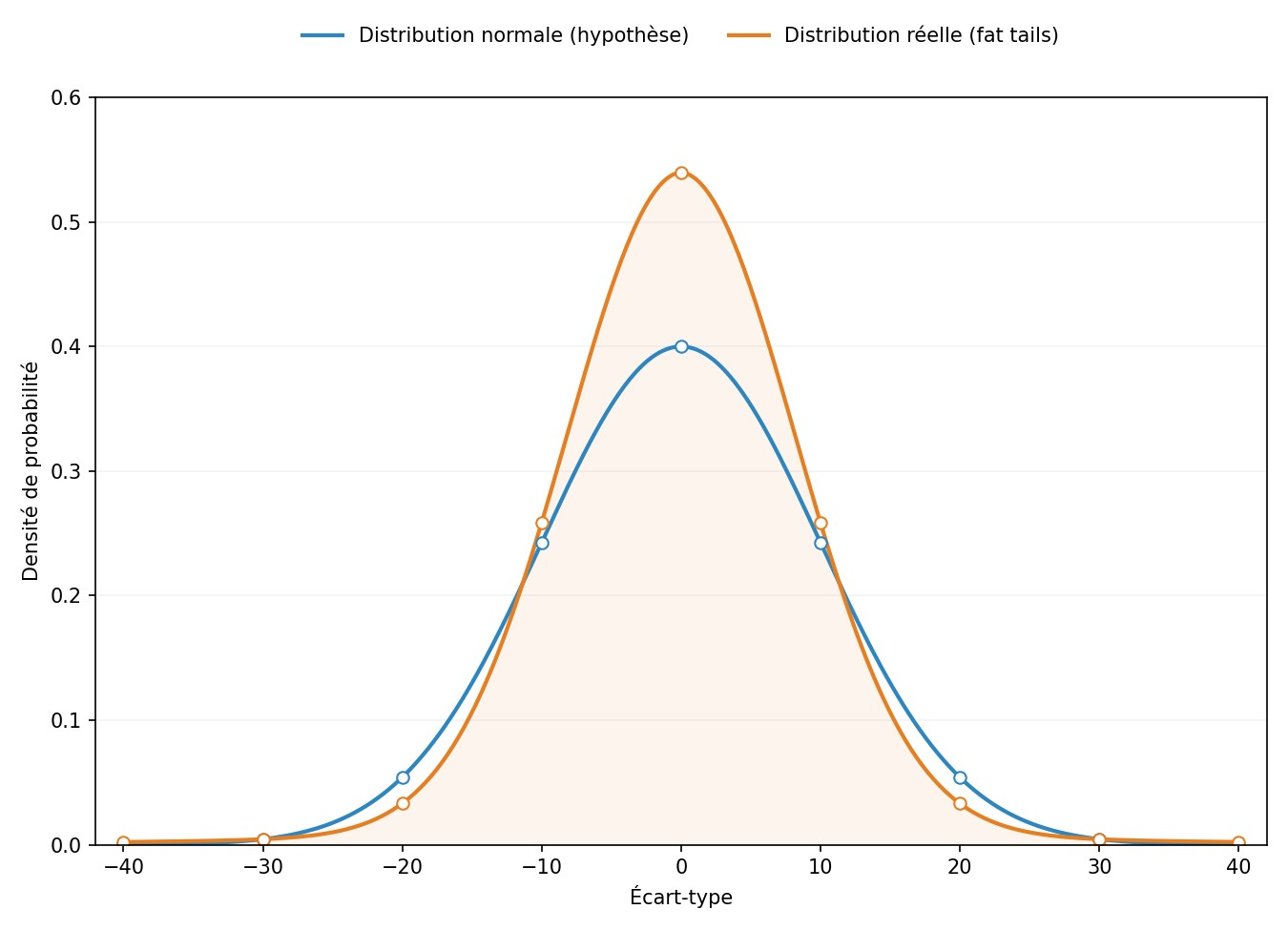
The stress tests used in rating models generally rely on distributions calibrated from historical data — an approach that anchors the analysis in empirical observation and ensures the statistical consistency of the scenarios chosen.
However, in an environment marked by climate disruption, persistent geopolitical tension, increasingly unstable correlations and a rising frequency of extreme events, distribution tails tend to thicken, and historical assumptions can come under pressure. The model remains mathematically coherent in its internal architecture. But when reality structurally departs from past dynamics, it can outrun the calibrations originally used.
An Approach Centered on Capital More Than Liquidity
Rating models mainly assess the sufficiency of economic capital against identified and modeled risks — the theoretical capacity to absorb losses under severe scenarios, expressed through prudential aggregates and calibrated buffers.
By contrast, they generally analyze with less granularity the quality of immediately available liquidity, the real capacity to monetize certain assets in a degraded market environment, or the degree of dependence on contingent credit lines that could contract under stress. Yet systemic crises frequently start out as crises of liquidity and confidence, well before becoming crises of solvency.
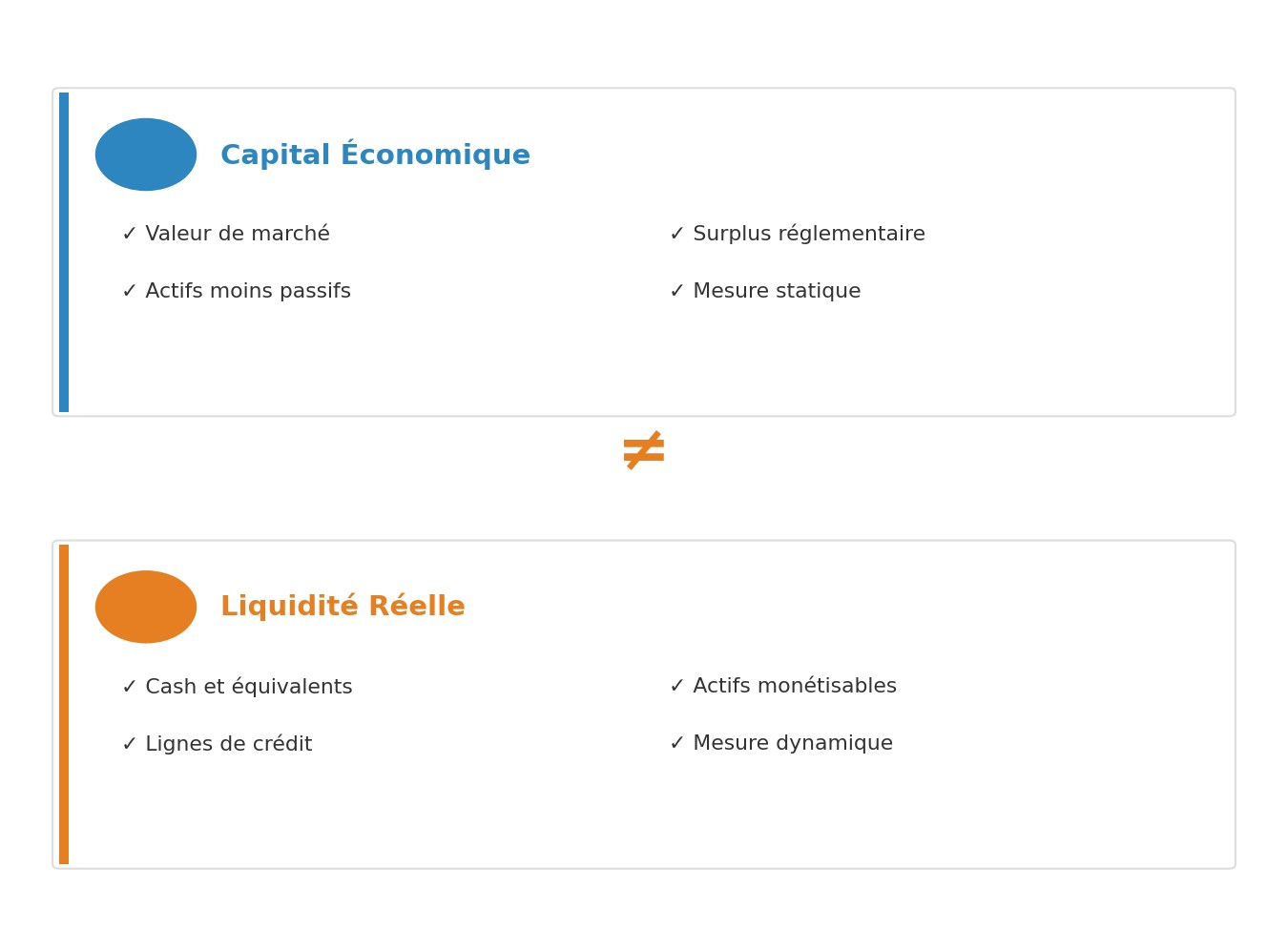
Economic capital and real liquidity do not always overlap — a point that rating models, centered on the former, capture less well than the latter.
An Aggregated View That Can Mask Strategic Concentrations
Capital aggregates, being synthetic by nature, can sometimes mask certain structural fragilities. Behind an overall comfortable solvency position may lie sensitive geographic concentrations, significant dependence on a handful of major cedants, implicit exposure to specific sovereign risks, or a rapid growth strategy in particularly volatile segments.
In this context, aggregated solvency can look reassuring at first glance. Yet strategic vulnerability — more diffuse and less immediately quantifiable — can prove more subtle, and potentially more decisive, under stress.
In short: rating measures a theoretical capacity to absorb modeled losses. It does not always measure, or only partially measures, operational resilience, the speed of strategic adjustment, or relationship strength. This is precisely where the debate becomes strategic.
History Points to the "Rating Lag" Phenomenon
Several international cases illustrate the gap between the emergence of a structural problem and the agency's revision of the rating — what is known as rating lag.
Players with a solid rating, sometimes even A or above, have suffered sudden breakdowns when underlying risks materialized. In the early 2000s, HIH Insurance still held an investment-grade rating shortly before its abrupt collapse, which revealed reserving and governance failures. In 2008, AIG held a high rating shortly before massive exposure through its financial subsidiary triggered a systemic crisis requiring major government intervention. In the MENA region too, some reinsurers have followed trajectories where technical or financial strains became visible gradually, well before any rating action.
In these situations, the downgrade occurred as difficulties became measurable in published accounts and financial indicators. These examples do not call into question the methodological rigor of the agencies — they simply remind us that a rating is a forward-looking opinion built on a defined analytical framework, and that, like any framework, it absorbs information as it becomes measurable. Yet weak signals — a drift in risk appetite, relaxed technical discipline, implicit sovereign concentration, rapid growth in volatile segments, poorly controlled accumulation management, or latent liquidity strain — are not always immediately captured by the models.
The question, then, is not whether rating is useful. The question is whether it can, on its own, capture the full range of weakening dynamics before they become fully visible.
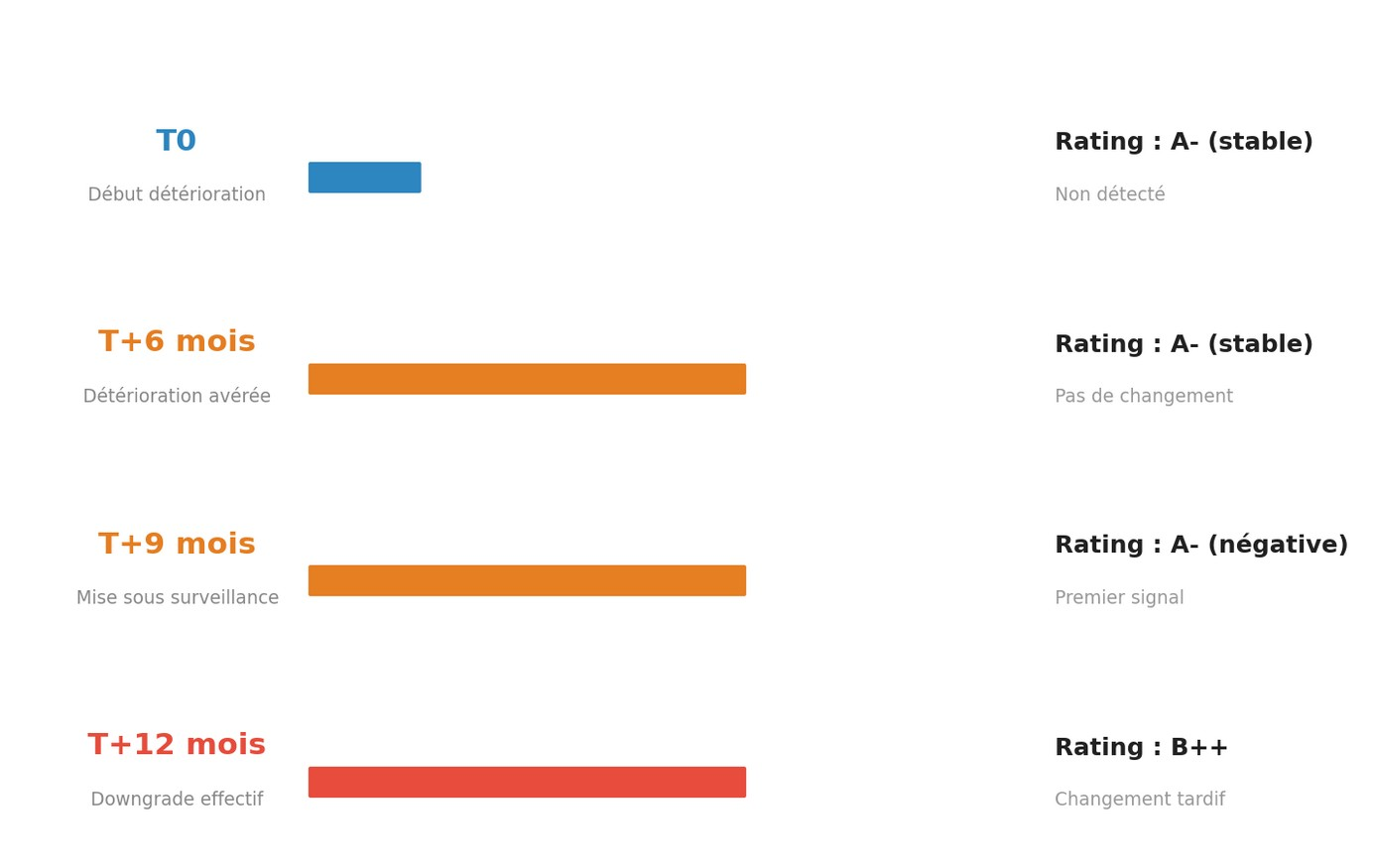
Average lag observed across several historical cases: 6 to 18 months between actual deterioration and the downgrade.
The Often-Forgotten Angle: The Real Quality of the Partnership
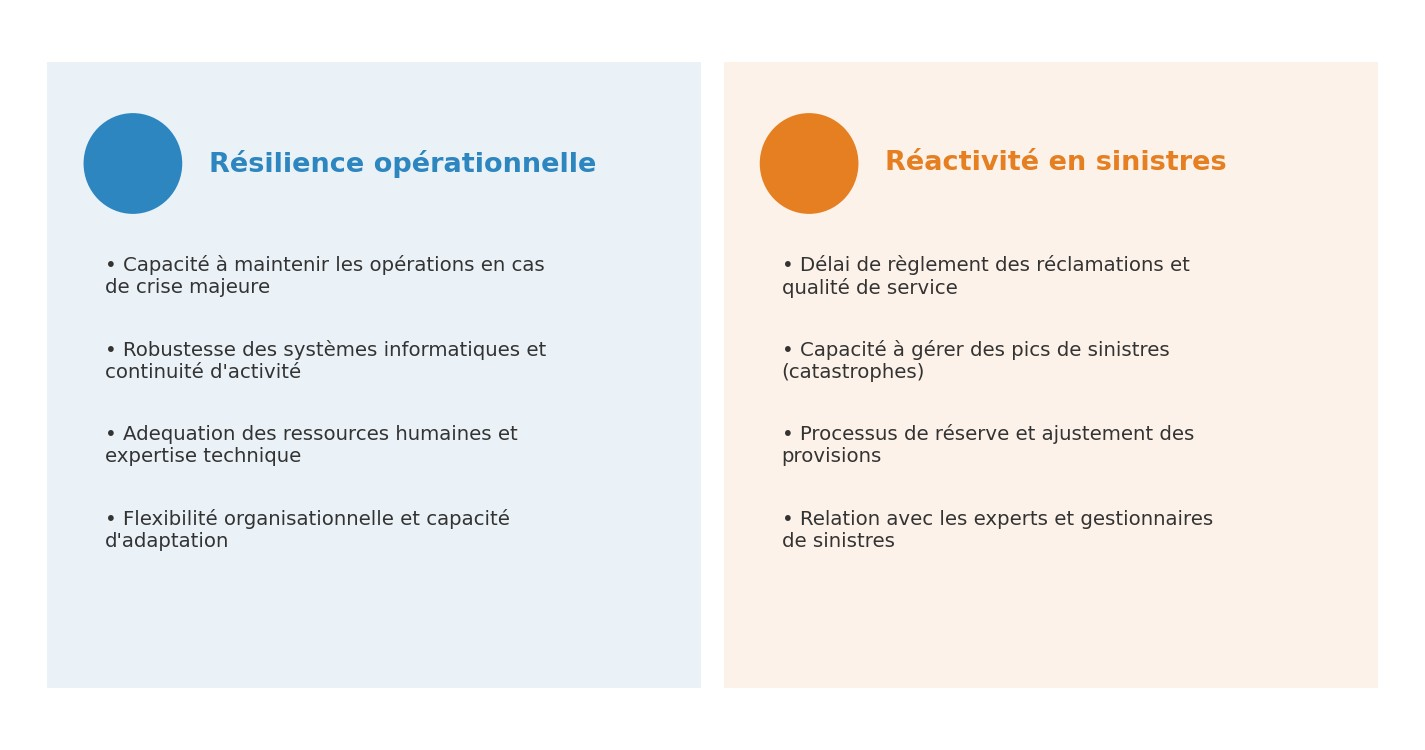
In day-to-day practice, a reinsurer's strength goes well beyond its rating alone. In a disaster situation, how quickly coverage is confirmed, how smoothly claims are settled, and the ability to honor commitments under pressure can prove decisive for a cedant facing a major shock.
Beyond these operational aspects, the ability to structure an innovative solution, challenge complex wording, support a program's bankability, or contribute to a market's skills development represents strategic value that no capital model captures.
Rating measures financial capacity to absorb losses. It does not measure, or only partially measures, strategic commitment, technical depth, or the quality of dialogue and partnership. Yet for a cedant, these dimensions can prove just as decisive as the rating itself.
The Systemic Risk of Concentration
When markets mechanically converge toward a narrow circle of A or A+ rated reinsurers, a concentration effect tends to build up gradually. This dynamic can look rational at the individual level, as each player seeks to reduce its own counterparty-risk exposure.
However, in pursuing this goal of reducing individual risk, the system as a whole can paradoxically increase its collective risk. Counterparty diversification is a fundamental risk-management principle — yet excessive homogeneity across panels can weaken the market's overall balance.
A uniform threshold applied mechanically can thus produce an unexpected domino effect, turning a prudential protection mechanism into a potential source of systemic vulnerability.
Moving Beyond Automation: Toward a Richer Approach to Counterparty Risk
Rating should remain a foundation. It is a useful, structuring and widely recognized benchmark. But it should not become an automatism. When a signal becomes the sole mechanism of access, it stops being an analytical tool and becomes a mechanical filter. If rating is to act as a threshold, that threshold should be intelligent, not exclusive. The point is not to marginalize rating — the point is to enrich how it is used.
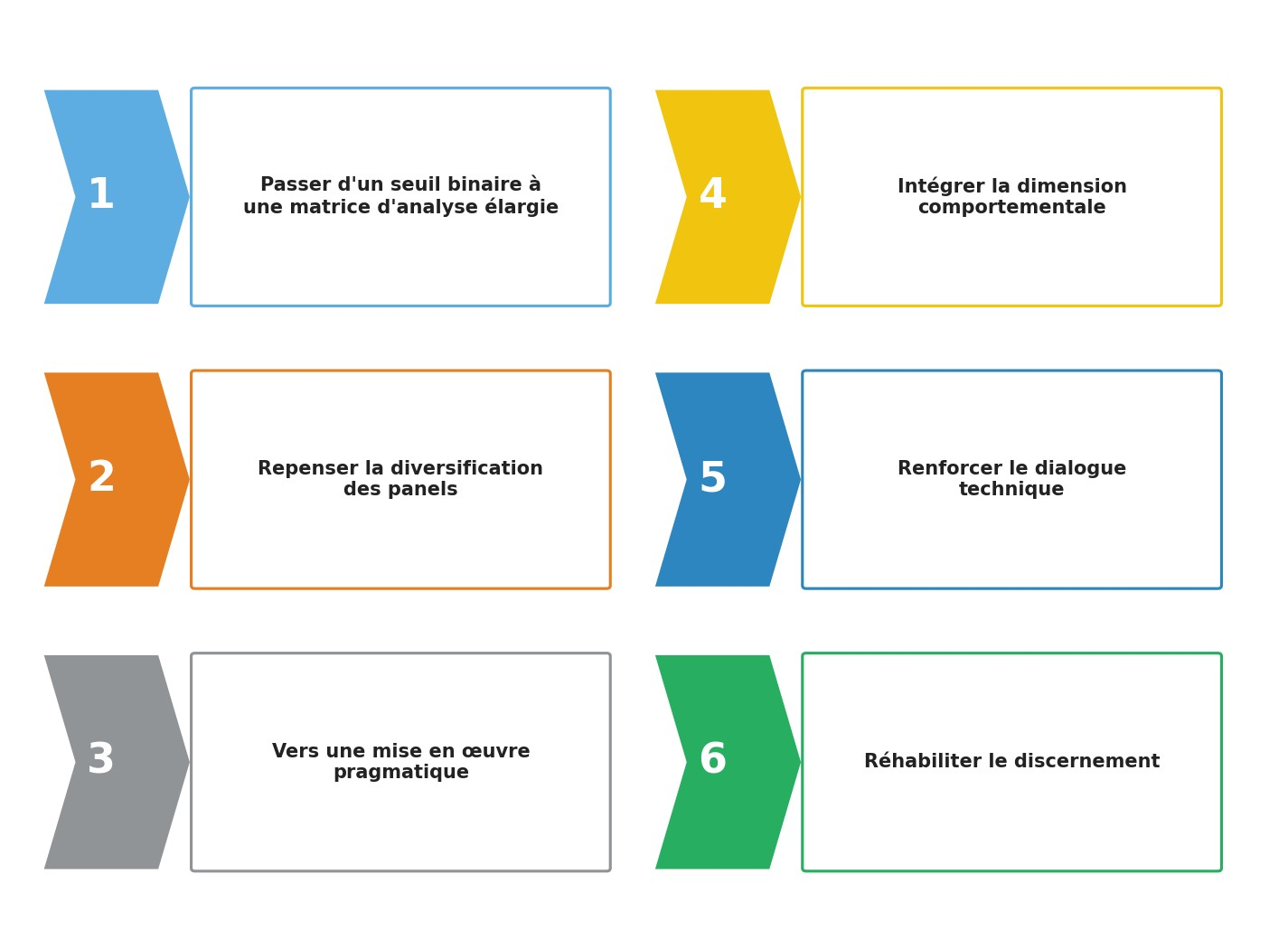
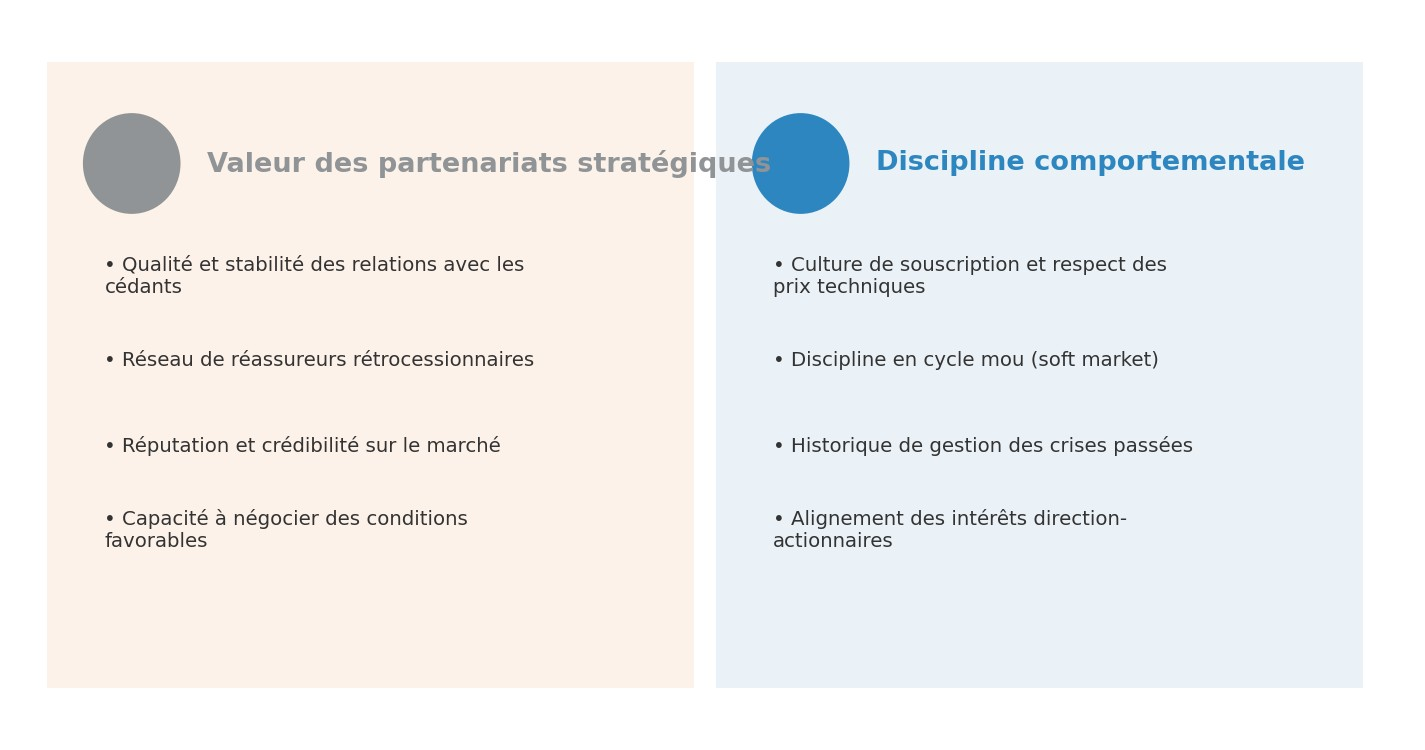
Integrate the behavioral dimension. Beyond financial ratios, the real track record on claims settlement, consistency of risk appetite, transparency during difficult renewals, and the stability of key teams are all powerful indicators of resilience. These elements reflect a management culture that no capital model captures. A reinsurer can be adequately capitalized and yet fragile in its behavior under stress; conversely, consistent discipline and robust governance can build confidence beyond the rating alone.
Rethink panel diversification. Mechanical concentration on a narrow circle of highly rated players may reduce perceived risk in the short term, but increase systemic vulnerability in the long term. Maintaining reasoned diversification, factoring in technical complementarity, and valuing solid regional players helps preserve a more resilient market balance.
Strengthen technical dialogue. A real understanding of counterparty risk cannot be reduced to reading a rating report. It is built through exchange: transparency on accumulations, clarity on retrocessions, alignment on climate scenarios, consistency in risk appetite. Rating is an external signal; resilience is built in the relationship.
Toward pragmatic implementation, this could concretely translate into:
- Insurers adopting an internal scorecard that complements rating, formalizing the analysis of liquidity, concentration and historical behavior.
- Encouraging, at the prudential level, an approach that treats panel diversification as a factor of systemic stability.
- Developing enhanced transparency standards on certain key qualitative indicators, to be shared at market level.
Without challenging existing thresholds, it is possible to introduce a framed, analytical flexibility.
Rehabilitating Judgment
In an environment marked by increasingly correlated climate, geopolitical and financial risks, model sophistication cannot substitute for informed analysis by market participants. Rating remains a structuring, recognized and useful signal: it introduces a minimum discipline and a common language between insurers, reinsurers and regulators. But when it becomes an automatism, it can reduce the complexity of counterparty risk to a single threshold. Yet a partner's strength is also built over time, through behavioral consistency, effective claims management, the quality of technical dialogue, and strategic coherence.
The point, then, is not to diminish rating's role. The point is to place it within a broader approach, one that incorporates liquidity analysis, concentration mapping, relationship history and panel diversification, alongside the other dimensions presented here.
In a world of systemic risk, collective resilience rests less on the mechanical application of a threshold than on market participants' ability to exercise structured professional judgment.
A threshold can structure a market. It cannot, on its own, guarantee its resilience.