
MGAs: stakes, mechanics, and outlook
Over the past few years, I've watched with great interest the rise of MGAs (Managing General Agents). This model, long seen as peripheral, is taking on an increasingly important place in the insurance and reinsurance value chain. Their role is no longer limited to technical delegation: they are becoming genuine catalysts of innovation and access to capital. And at the same time, they raise fundamental questions about the future of the traditional reinsurance company model.
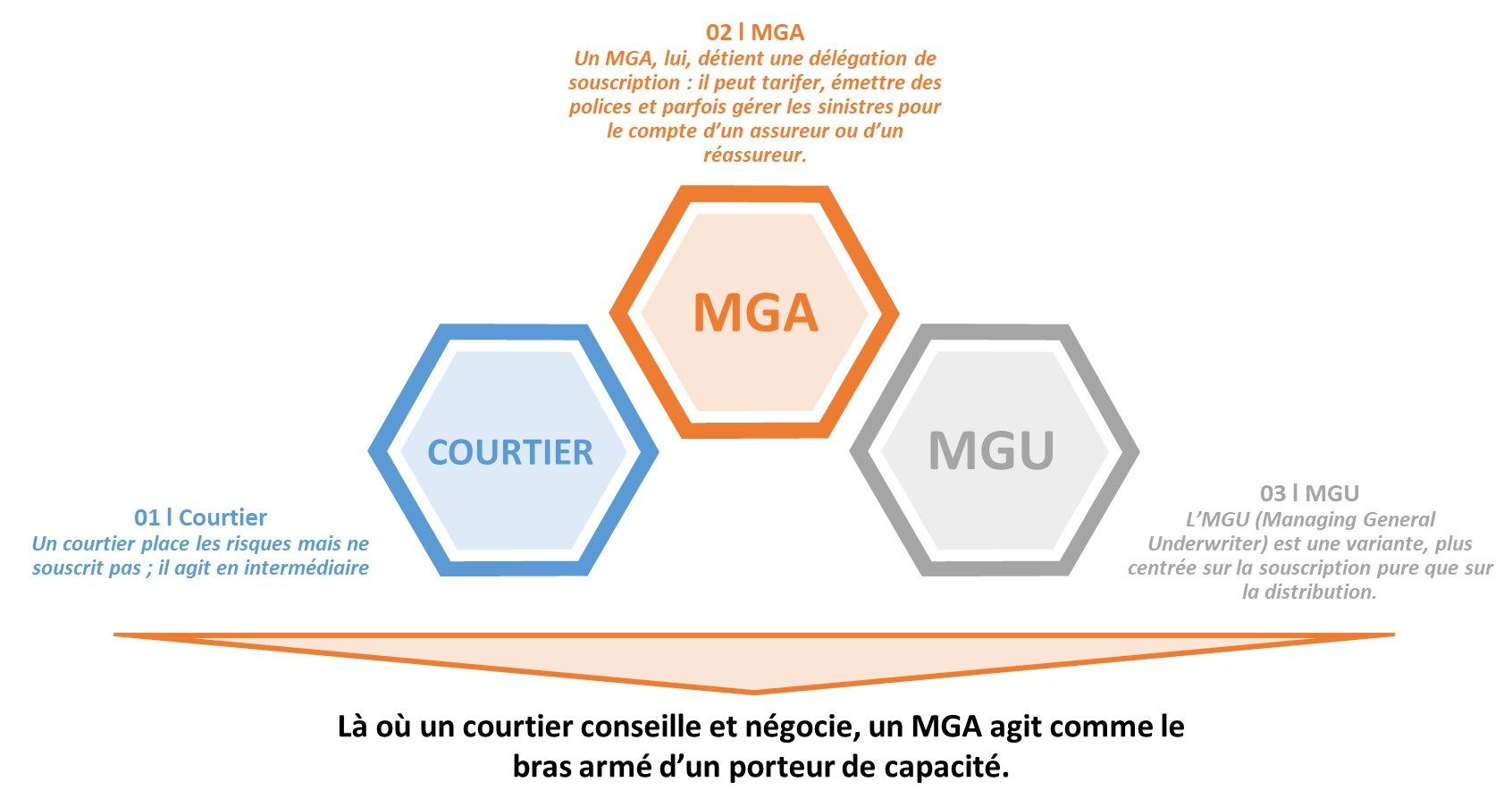
MGA, MGU, and broker: three roles worth distinguishing
It's worth recalling the difference:
How does an MGA really work?
In practice, I see an MGA as a virtual insurance company. It has no balance sheet of its own, but it holds technical authority. Its insurer or reinsurer partners entrust it with capacity, set strict guidelines, and expect disciplined management in return:

The question of capacity and rating
An MGA's capacity is built through a panel of insurers and reinsurers, somewhat like a syndication. The MGA then becomes the entry point to a pool of capacity. It's an agile system, but one that remains dependent on the trust in, and quality of, its partners.
When it comes to rating, it's rare for an MGA to hold a rating of its own: it's the risk-carrying reinsurers who "lend" their financial strength. In practice, it's often the panel's highest rating that gets highlighted.
A more "capital efficient" model: a strategic question mark
Looking at this evolution, I can't help asking a fundamental question. Why tie up tens, or even hundreds, of millions of dollars to obtain a reinsurer license, build regulatory capital, and submit to solvency ratios and ongoing regulatory supervision, when an MGA can access the same market capacity without any of these constraints?
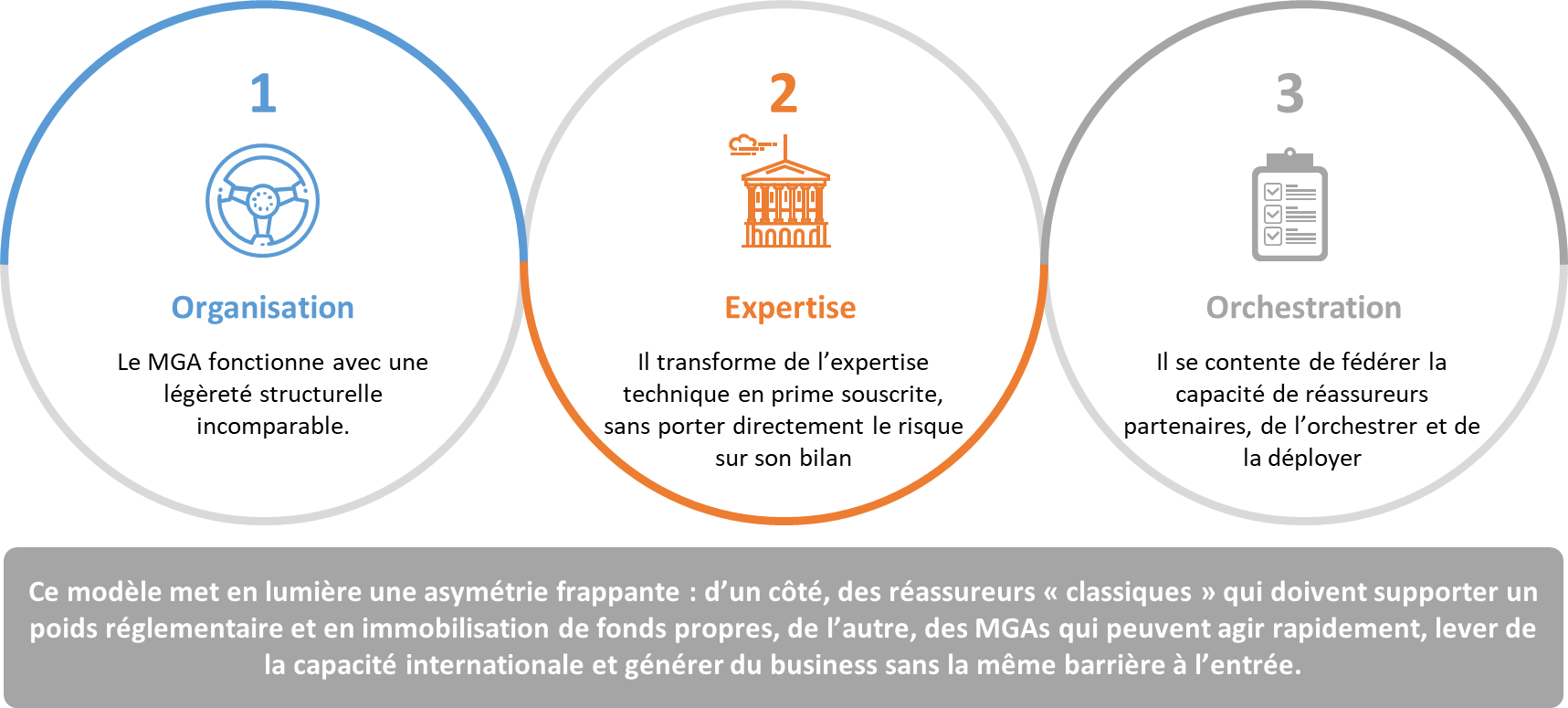
That leads me to ask: what is the future of reinsurance companies that hold no particular regulatory advantage (legal cession, mandatory access to local markets), yet still have to tie up capital on a massive scale? Won't the market eventually favor lighter, more agile structures that can combine expertise with efficiency, rather than heavily capitalized but rigid companies?
I don't claim to have a definitive answer, but I'm convinced this is where part of our industry's future is being decided :)
The question of accumulation and control
This is actually one of the most sensitive challenges. When a reinsurer delegates to an MGA, it must keep clear visibility over risk accumulations. The danger is building up, unknowingly, exposures in the same zone or the same line of business. Without robust aggregation and monitoring tools, delegation can turn into a black box. In my view, it's on this ground — governance and control of accumulations — that the long-term credibility of the MGA model will be decided. I want to acknowledge the often quiet but essential work of the teams who track and manage accumulations within reinsurance companies. I consider it a pillar of balance-sheet resilience against adverse events.
A few numbers to take the measure of it
The numbers speak for themselves. Here are a few of them (sources in the appendix):
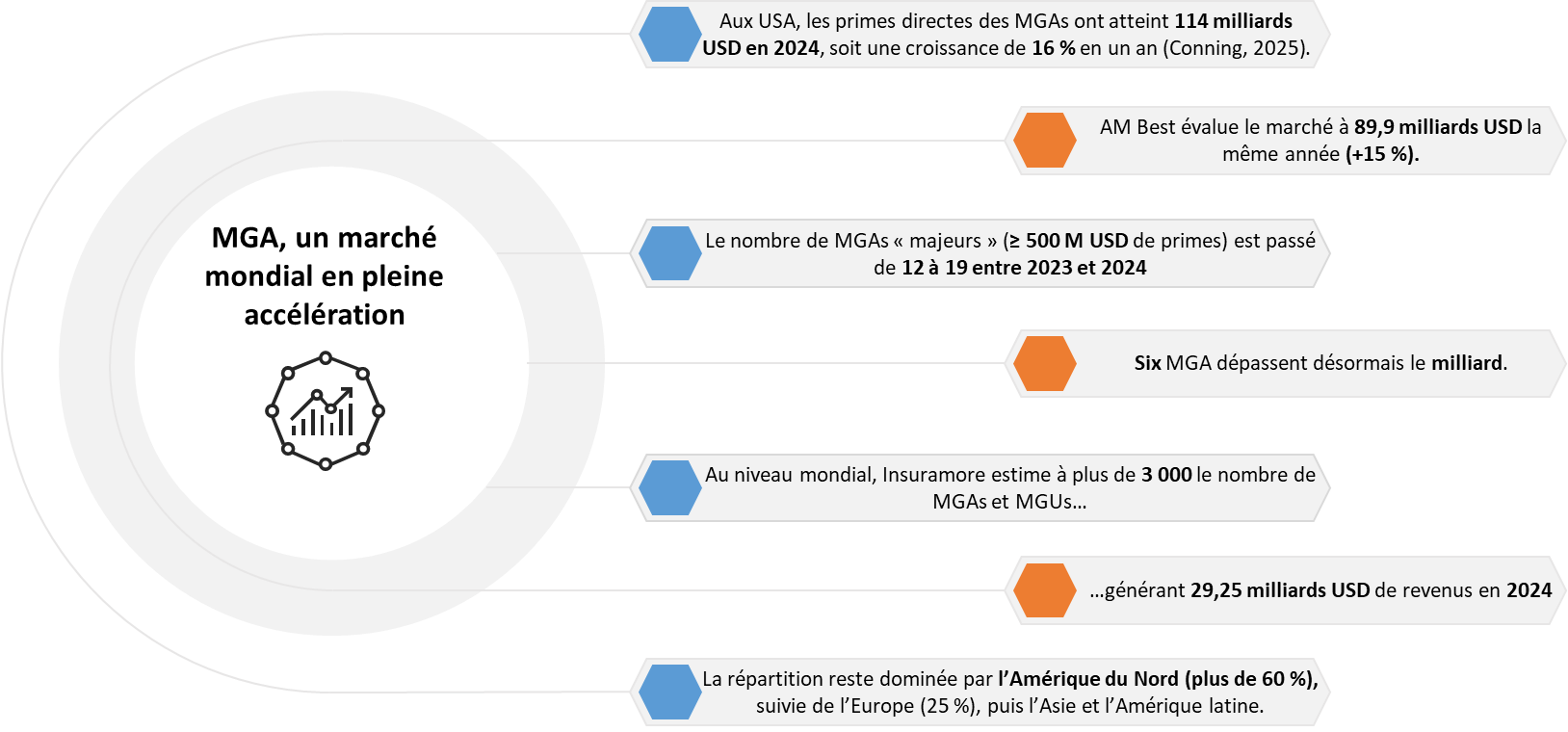
Key figures... a future that looks increasingly promising.
Conclusion
Watching this evolution unfold, I see a double reality in MGAs. They embody a force for innovation, agility, and appeal to talent, but they will only truly establish themselves if their growth is matched by demanding governance, greater transparency, and a clear regulatory framework... The real question may lie elsewhere: what balance do we want tomorrow between traditional reinsurance companies — capitalized and supervised — and these lighter, faster structures that depend on the trust placed in them? Does it still make sense to impose high capital levels on reinsurers when MGAs can pool the same capacity without tying up equity? Or, conversely, is it precisely that capital and that regulation which guarantee the system's resilience in the face of crises?
I don't have a definitive answer, but I'm convinced this question deserves to be shared...
Sources
The data and analysis mentioned in this article draw notably on: